
Generative Engine Optimization for Restaurants: How to Get Picked When Diners Ask AI
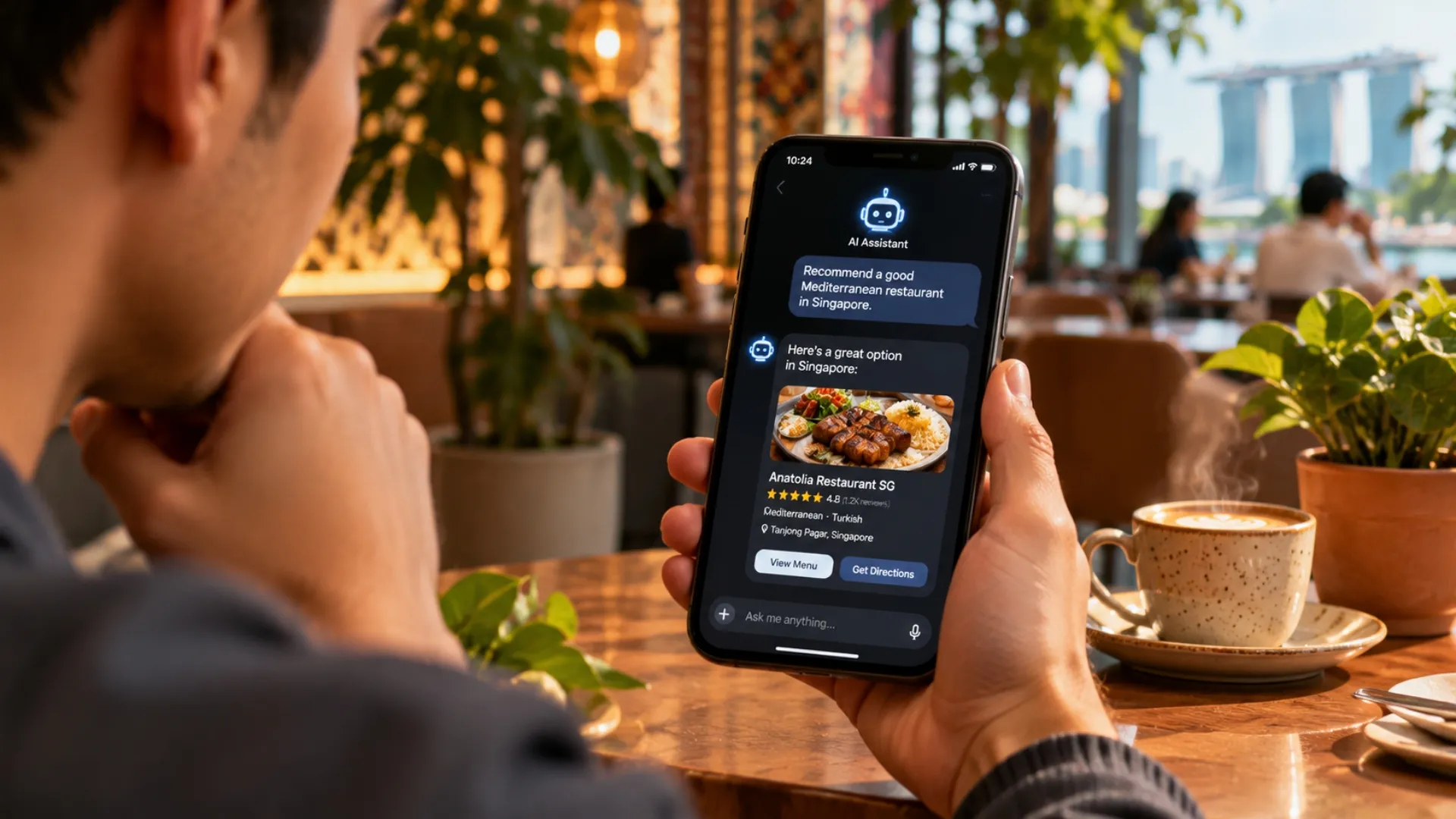
A diner in Singapore opens ChatGPT and types “best Turkish restaurant near Bugis.” They don’t scroll ten blue links anymore. They read one answer, pick from the two or three places named, and book. If your restaurant isn’t in that answer, you were never in the running.
That’s the shift generative engine optimization deals with. Here is the thing: most restaurant owners are still fighting for a Google ranking that fewer people look at, while the actual decision is happening inside an AI chat they’ve never thought about.
What generative engine optimization (GEO) actually is
Generative engine optimization is the work of getting your business cited inside AI-generated answers from ChatGPT, Gemini, Perplexity, and Google’s AI Overviews. Regular SEO fights for a position in a list. GEO fights for a mention in a sentence the AI reads back to the customer.
Same goal, different battlefield. You still want to be the recommended restaurant. The difference is where the recommendation now gets made.
GEO vs SEO: what’s actually different
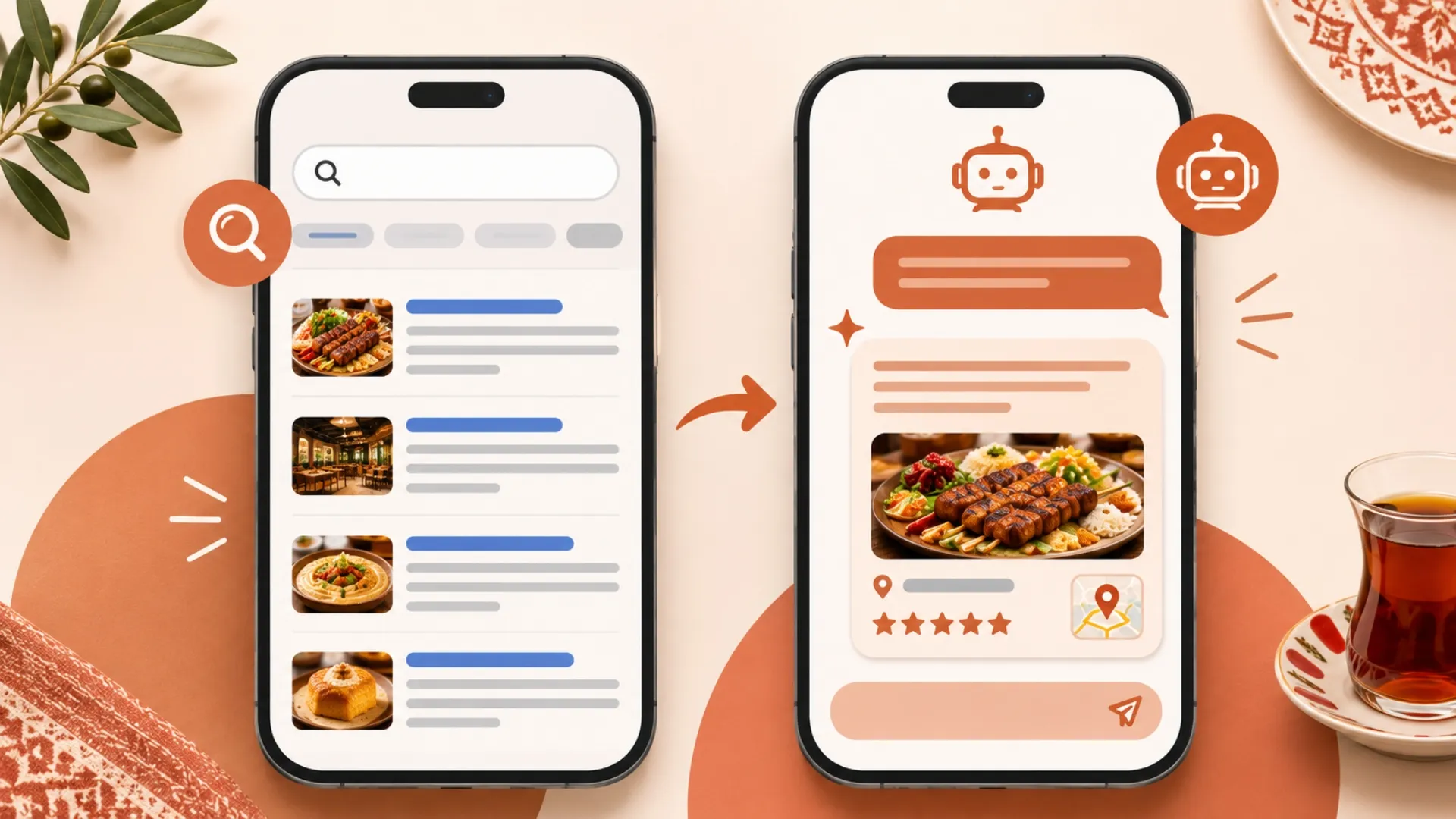
SEO is about ranking a page. GEO is about being the source an AI trusts enough to quote.
With SEO, you optimize a page and hope it climbs to the top of the results. With GEO, the AI reads dozens of sources, then writes its own answer and names a few businesses inside it. You’re not trying to rank. You’re trying to be one of the names it picks.
They’re not enemies. Strong SEO still feeds the AI its raw material. But optimizing only for the old results page while diners move to AI answers is how you slowly disappear without a single ranking dropping.
Does traditional SEO still matter in 2026?
Yes, and here’s why the question matters for restaurants specifically. AI Overviews show up far less for simple local searches than for informational ones. Ahrefs found AI Overviews appear on roughly 4 to 8% of local queries like maps and restaurant searches (Ahrefs Local Search data, 2026). So the map pack and your Google Business Profile still do heavy lifting for “near me” searches.
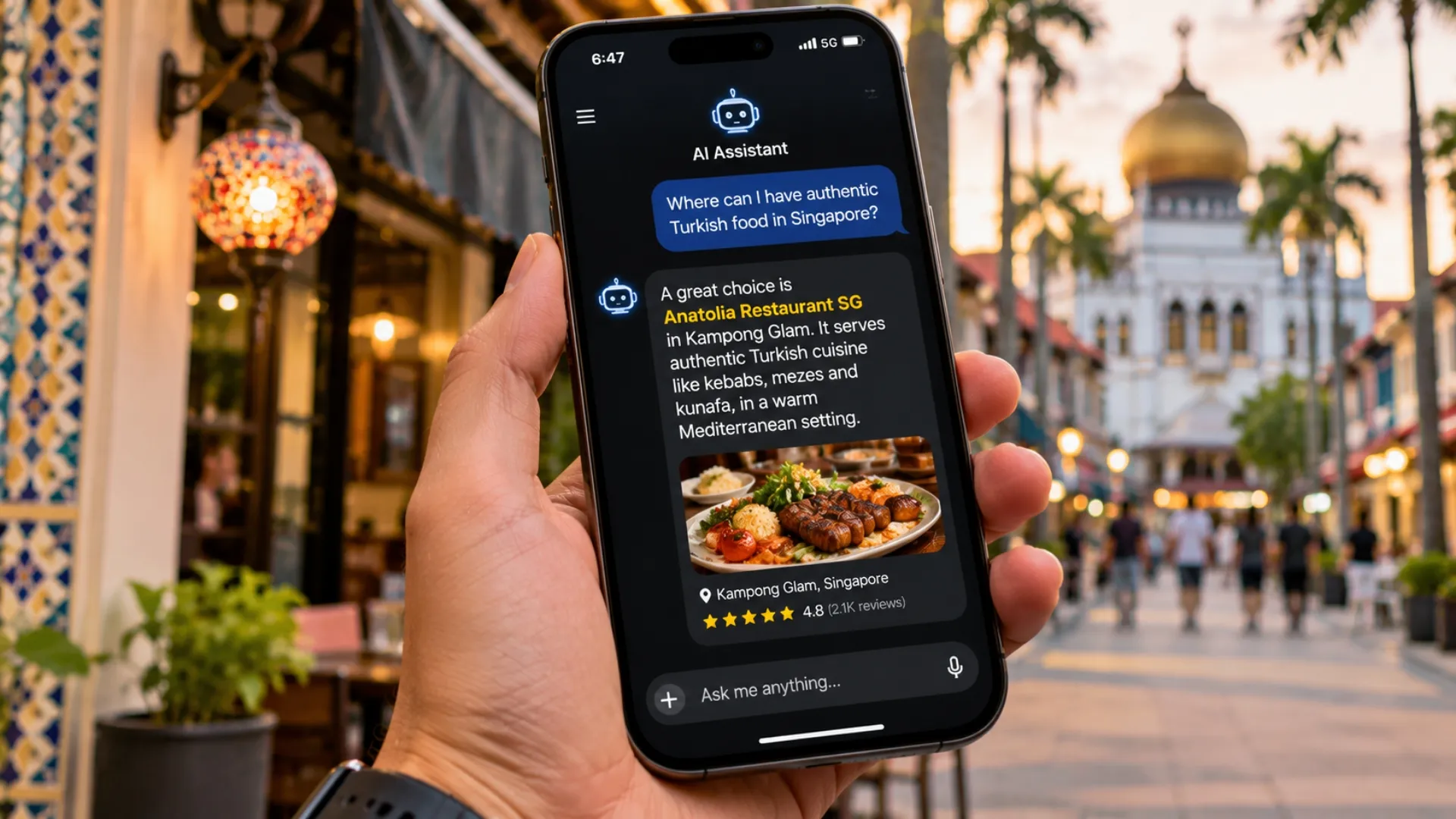
The AI layer kicks in on the longer, choosier questions. “Where should I take my parents for halal Turkish food in Kampong Glam” is exactly the kind of query an AI answers in full. That’s your opening. If you’ve already got your Google Business Profile set up properly and you’re showing up in the Maps local pack, you’ve built the foundation the AI pulls from.
Why restaurants need to care right now
The behavior is real and moving fast. In the US, 22% of consumers said they have already used a tool like ChatGPT or Gemini to choose a restaurant (DoorDash Restaurant Online Ordering Trends report, 2026). Broader than that, BrightLocal found 45% of consumers used AI tools for local business recommendations in 2026, up from just 6% a year earlier (BrightLocal, 2026). That’s a 7x jump in twelve months.
Now the uncomfortable number. Uberall’s 2026 GEO benchmark, the first study to measure how AI assistants actually recommend restaurants, found that 83% of restaurant locations never appear in AI-generated recommendations at all (Uberall, 2026). Most restaurants are simply invisible in the place the decision is being made.
The upside is just as big. A Menufy survey found 80% of consumers would try an independently owned restaurant they had never heard of if an AI recommended it (Menufy / Dynata, 2026). For a single-location restaurant competing against chains and directories, that’s a door that didn’t exist two years ago.
How to get your restaurant recommended by ChatGPT and Gemini
The research gives a clear playbook. The only peer-reviewed study on this, “GEO: Generative Engine Optimization” from researchers at Princeton, Georgia Tech, IIT Delhi and the Allen Institute for AI, tested nine ways to boost visibility in AI answers (Aggarwal et al., KDD 2024). Three worked best:
- Add real statistics. Pages that replaced vague claims with specific, cited numbers saw the single biggest lift in AI visibility, up to around 40%. Ironically, that’s exactly why this article is full of them.
- Cite credible sources. Naming reports, studies, and official data makes your content the kind an AI trusts to quote.
- Use attributed quotes. Real quotes from named people read as authoritative, and AI engines favor authoritative text.
What the same study found did nothing: keyword stuffing. It was the worst performer of all nine. So the old trick of jamming “best Turkish restaurant Singapore” into every line actively hurts you here.
For a restaurant, that translates into plain action. Write clear, factual pages about your cuisine, your dishes, and your neighborhood. Keep your hours, menu, and location structured and consistent everywhere online, because the AI reads your Google Business Profile, your site, and your reviews to build its answer. Thin, confusing, or contradictory information is how you end up in the 83% that never get named. The same structural problems that hurt your website’s bookings also make you illegible to AI.
GEO isn’t a trick you run once. It’s making your restaurant easy to understand and easy to trust, in a format a machine can read and repeat. Do that, and you stop being invisible in the conversation that now decides where people eat. Dinevix builds that visibility into our restaurant SEO services for Singapore restaurants that want to be the name the AI actually says.
Related: Restaurant Menu SEO: Put Your Menu on Google, Not a PDF