
How Much Does Restaurant Marketing Cost in Singapore?
Quick Answer
Restaurant marketing cost in Singapore depends on your stage, your channels and how many outlets you run. Published guidelines from Singapore agencies put new restaurants at 8% to 12% of revenue and existing restaurants at 5% to 8%. In dollars, one agency says independent restaurants commonly spend S$1,500 to S$4,000 a month, and multi-outlet groups S$5,000 to S$15,000 or more. Treat these as starting points, not quotes.

Why Restaurant Marketing Prices Are Hard to Find
Ask three agencies what restaurant marketing costs and you will get three answers, because they are quoting three different jobs. One price covers a Google Business Profile and a few posts. Another covers ads, content and a website. Most agencies do not publish prices at all.
So instead of inventing a rate card, this guide collects the figures Singapore agencies have actually published as of November 2026, shows you how to turn them into a budget for your own restaurant, and lists what to ask before you sign anything. These are agency-published guidelines, not audited surveys.
Restaurant Marketing Cost in Singapore: What Is Published
| Source | Applies to | Published figure |
|---|---|---|
| C.O. Enterprise (April 2026) | New restaurant | 8% to 12% of revenue |
| C.O. Enterprise (April 2026) | Existing restaurant | 5% to 8% of revenue |
| Marketing Agency Singapore | Independent restaurant | S$1,500 to S$4,000 a month across ads, content and platform fees |
| Marketing Agency Singapore | Multi-outlet group | S$5,000 to S$15,000 or more a month |
| STAMPEDE | Small Meta ads test | From S$5 a day, about S$150 a month |
| KOLReach | Influencer campaign | Packages from S$200, which the agency calls its own entry price and not a market average |
The sources count different things. C.O. Enterprise treats social media, photography, promotions, ads, branding, printing and your website as marketing. Marketing Agency Singapore counts ads, content and platform fees. Before you compare any two numbers, check what each one includes.
What the Percentages Mean in Dollars
Take a restaurant with S$60,000 in monthly revenue. This is an example, so swap in your own figure.
| Stage | Percentage of revenue | Monthly budget at S$60,000 revenue |
|---|---|---|
| Existing restaurant | 5% to 8% | S$3,000 to S$4,800 |
| New restaurant | 8% to 12% | S$4,800 to S$7,200 |
A smaller restaurant at S$30,000 a month would land at S$1,500 to S$2,400 using the existing-restaurant range, which falls inside the independent range above.
Our read: new restaurants sit higher because nobody knows you yet. Reviews, repeat guests and a complete Google profile take time to build, so early budgets work harder to make up for it.
What Changes the Price by Channel
Google Business Profile, local SEO and restaurant SEO
These are usually priced as a monthly retainer. The price moves with the number of outlets, how much content is needed, whether review replies are included and how much clean-up your listings need. Results take time: Marketing Agency Singapore says SEO, content and review growth take a few months to mature.
The free part you can do yourself. Start with our Google Business Profile setup guide. If you want help, see our Google Business Profile, local SEO and restaurant SEO services.
Google Ads and Meta ads
Paid ads have two costs. One is ad spend, which goes to the platform. The other is the fee for whoever runs the account. Ask for both in writing.
At the small end, STAMPEDE suggests testing Meta ads from S$5 a day, and it cites Hashmeta figures of S$0.80 to S$2.50 per click for food and beverage ads in Singapore. A click is not a diner, so track visits and bookings instead. Marketing Agency Singapore says well-targeted ads plus a tightened Google profile often bring more reservations within two to six weeks.
See our Google Ads and Meta ads services.
Influencer and creator campaigns
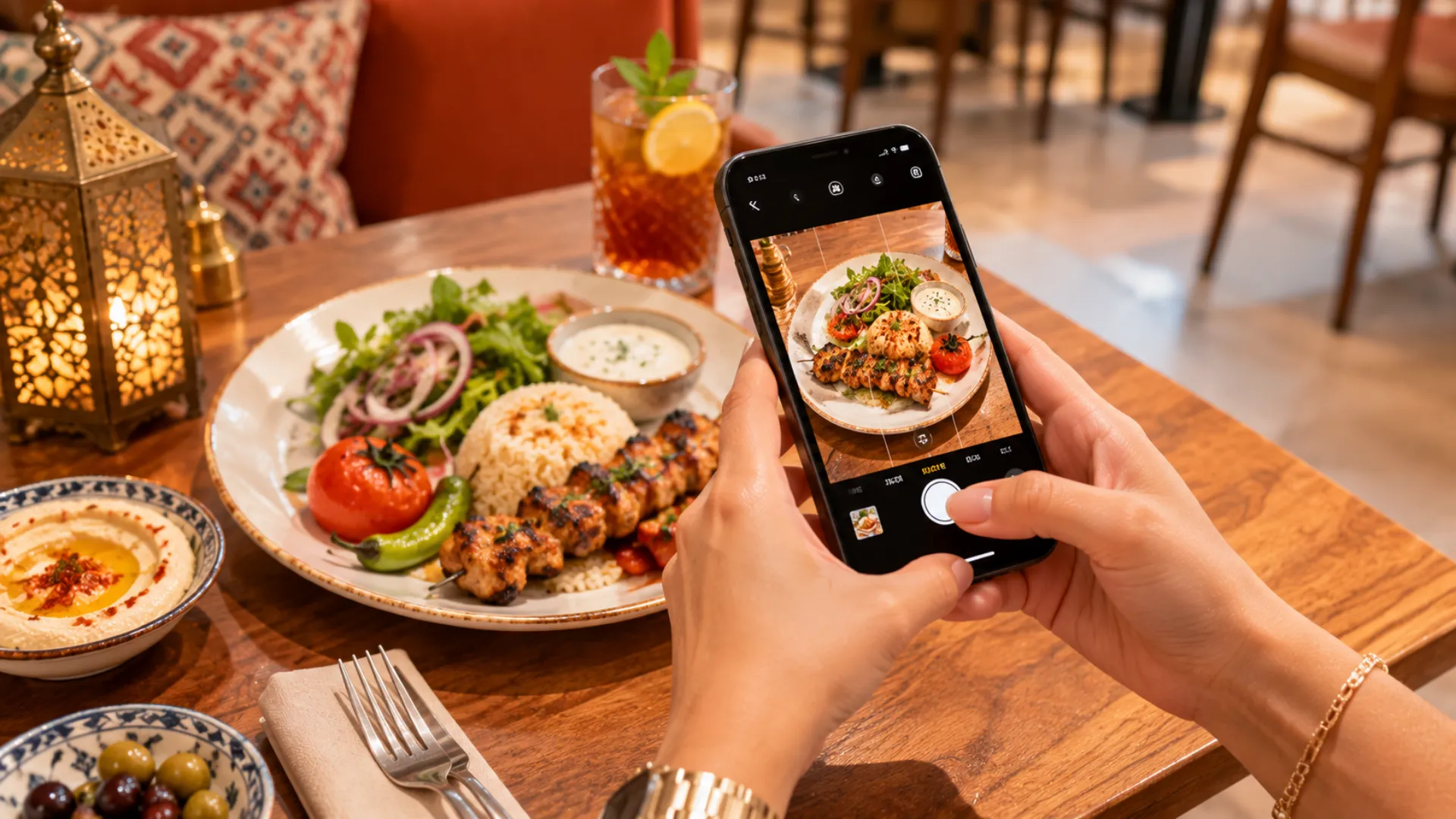
KOLReach says its packages start from S$200 and that this is its entry price, not a Singapore market average. Its guide lists what changes the price:
- How well the creator and their audience fit your restaurant.
- How many videos or posts you get, and in what format.
- Whether the content runs on one account or several platforms.
- How much filming time, revision and reshoot work is involved.
- Whether you can reuse the content or run it as paid ads.
- The meals, guests and logistics you cover for the creator.
Two quotes that both say one creator can describe very different work, so put the deliverables side by side before you compare prices. See our creator partnerships page.
Social media, photography and your website
Social media is usually a monthly fee, while photography and a website are often one-off projects with smaller upkeep costs afterwards. Consistency beats volume: Marketing Agency Singapore suggests two to four quality posts a week, plus short video for new dishes, is sustainable for most teams.
See our social media marketing and restaurant website design services.
Agency, Freelancer or In-House?
This table is our view, not a published figure.
| Option | Suits you when | Watch out for |
|---|---|---|
| Freelancer | You need one channel run well on a tight budget | Limited cover when they are busy or away |
| In-house hire | You run several outlets and have steady work every week | A fixed salary, and the limits of one person’s skills |
| Agency | You need several channels working together | Unclear scope, so ask what is included each month |

Costs Outside the Marketing Line
- Delivery app commissions. Marketing Agency Singapore notes that GrabFood, Deliveroo and foodpanda bring volume but squeeze margin, so work out what a delivery order really earns you after commission and promotions.
- Photography updates whenever the menu changes.
- Booking and ordering tools, and the staff time to run them.
- Staff time for replying to reviews and hosting creators. KOLReach points out that hosting creators carries its own operational cost.
How to Set Your Own Restaurant Marketing Budget
- Start with last month’s revenue and apply the published range for your stage. That gives you a ceiling to work down from.
- List what you count as marketing, such as photography, ads, your website and platform fees, so every quote is compared on the same basis.
- Work out your break-even. Divide monthly marketing spend by your average spend per diner multiplied by your gross margin. With S$3,000 of spend, S$25 per diner and a 40% margin, you need 300 extra diners a month to break even. Those numbers are made up for the example, so use yours.
- Pick one or two channels you can run properly instead of five that stay thin.
- Decide how you will track results before you spend: tagged links, a booking source question or offer codes. Judge cost per booking or visit, not clicks.
- Review each channel on its own timeline. Paid ads can show results within weeks, while SEO and review growth take months.
What to Ask Any Agency Before You Sign
- What is included each month, in writing?
- Is ad spend separate from the management fee, and who pays the platform?
- Who owns the ad accounts, analytics and Google Business Profile, and will they stay in my name?
- How will you track bookings or visits, not just clicks?
- How long is the contract, and how do I leave?
- Who will actually do the work?
Get a Number for Your Restaurant
Published ranges only get you so far. If you want a figure for your own restaurant, send Dinevix your outlet, your current channels and a rough monthly revenue band, and we will scope what makes sense. Contact Dinevix.
Related Reading
- How to Set Up and Optimise a Google Business Profile for a Restaurant
- How Singapore Restaurants Rank on Google Maps: The 2026 Local Pack Playbook
- Restaurant Website Mistakes Killing Reservations in Singapore
- Restaurant SEO Services
Author Bio
Dinevix Team
Dinevix is a Singapore-based restaurant marketing agency working with independent restaurants, cafes, and chains across Kampong Glam, Tanjong Pagar, Orchard, and the heartlands. Our team manages Google Business Profiles, local SEO, website builds, and paid campaigns for F&B operators who want measurable growth, not vanity metrics.
Website: dinevix.com
Contact: Get in touch
Frequently Asked Questions
How much should a restaurant spend on marketing in Singapore?
Published guidelines put new restaurants at 8% to 12% of revenue and existing restaurants at 5% to 8%. One Singapore agency says independent restaurants commonly spend S$1,500 to S$4,000 a month. Use these as a starting range and adjust for your outlets and goals.
Is S$1,000 a month enough for restaurant marketing in Singapore?
It is below the published range for independent restaurants. It can cover one or two focused jobs, such as keeping your Google Business Profile current and running a small Meta ads test, but not several channels at once.
What is the cheapest way to market a restaurant in Singapore?
Completing your Google Business Profile and replying to reviews costs nothing but time. For paid ads, STAMPEDE suggests testing Meta ads from S$5 a day.
How much do restaurant marketing agencies charge in Singapore?
Most do not publish prices. The figures in this guide are published guidelines, and the real price depends on scope, outlets and channels. Ask for the scope in writing before you compare fees.
Is Google Ads worth it for a small restaurant?
It can be if you track bookings and visits rather than clicks. Remember there are two costs, the ad spend and the management fee. Marketing Agency Singapore says well-targeted ads plus a tightened Google profile often bring more reservations within two to six weeks.
How much does influencer marketing cost for a restaurant in Singapore?
KOLReach says its packages start from S$200 and calls that its own entry price, not a market average. The final price depends on the creator, deliverables, platforms, production and usage rights.
How long does restaurant marketing take to show results?
Paid ads and a tightened Google profile can bring reservations within two to six weeks, according to Marketing Agency Singapore. SEO, content and review growth take a few months.
Do busy restaurants still need marketing?
Usually yes. Repeat visits and reviews keep a restaurant busy through quiet months and new competition, and Marketing Agency Singapore calls repeat visits usually the most profitable revenue a restaurant has.
Conclusion
Restaurant marketing cost in Singapore has no single number. Start from the published ranges for your stage, decide what you count as marketing, pick one or two channels you can run well, and track bookings instead of clicks. Review each channel on its own timeline before you judge it.
If you want a figure built around your restaurant, talk to Dinevix.
Sources
- C.O. Enterprise: How Much Should Restaurants Spend on Marketing in Singapore?
- Marketing Agency Singapore: Digital Marketing for Restaurants in Singapore
- KOLReach: Restaurant Influencer Marketing Cost in Singapore
- STAMPEDE: Restaurant Advertising Budget, Start with $5 a Day
Related: Google Ads for Restaurants in Singapore: A Setup Guide — a full breakdown of what to spend and how to track it.